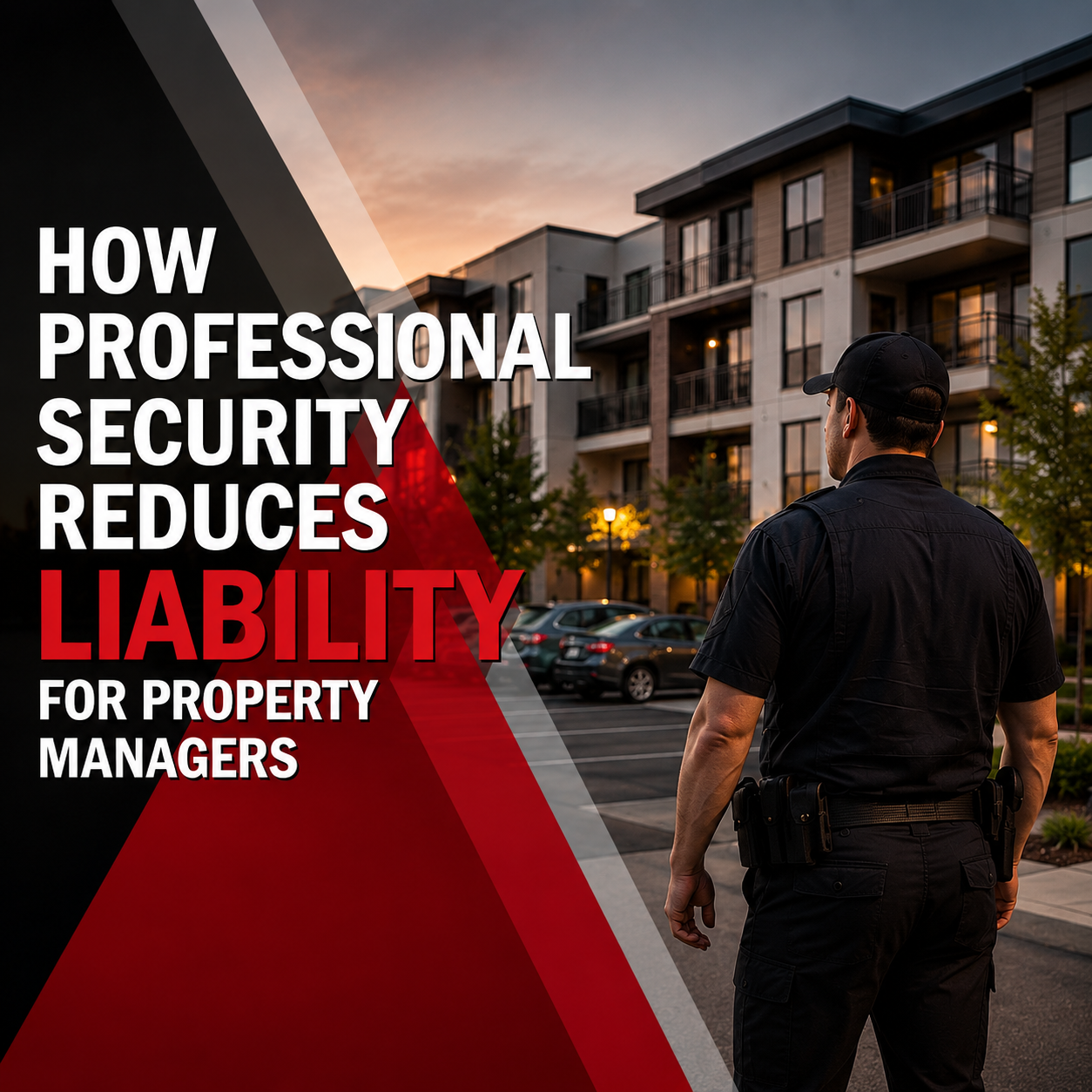
A broken gate goes unrepaired. A parking lot light stays out for weeks. An unauthorized person keeps entering a building, but no one records the incidents. Each issue may seem small. Together, however, they can create serious problems for a property manager. Effective property management security does more than prevent theft. It creates a clear system for identifying risks and responding to incidents. It also helps protect tenants, employees, visitors, and assets. For property managers, professional security can support property safety and broader risk management.
Here is how the right security program can help reduce liability while improving visibility across a property.
Why Property Management Security Matters for Liability
Property managers face risks that change throughout the day. A commercial building may feel busy and secure at noon. The same building can become quiet and vulnerable after business hours. Apartment communities may face parking disputes, broken gates, unauthorized guests, or poorly lit areas. Retail properties may deal with theft, loitering, vandalism, and customer conflicts. After a serious incident, one question often matters most. Did management take reasonable steps to identify and address known risks?
Professional security does not remove all liability. No security plan can guarantee that an incident will never happen. Still, a well-designed program shows that management takes safety concerns seriously. It also creates a process for finding problems and responding to them. That makes security part of a broader liability reduction strategy. It is more than another operating expense.
The International Facility Management Association discusses how property owners and managers can face negligence claims when they fail to address known risks. A consistent security program can help managers show that they take reasonable precautions.
Professional Security Creates Documentation and Accountability
One of the biggest advantages of professional security is documentation. Imagine a tenant reports a suspicious vehicle at midnight. Without a clear process, that report may sit in an inbox until morning. With professional security, an officer can inspect the area right away. 
The officer can record what happened and note the response time. The officer can also contact management or law enforcement when needed. Those records can help with more than crime investigations. Security reports often reveal patterns that property managers might otherwise miss. They may show repeated problems with lighting, access points, trespassing, abandoned vehicles, or unlocked doors. Managers can then address those issues before they become larger concerns.
Travelers recommends clear incident procedures and strong documentation as part of premises risk management. Strong documentation also gives managers a clearer view of security performance. Patrol reports can show when officers visited a property and what they found.
Geo-fencing and patrol tracking add another layer of accountability. These tools can verify arrival times and confirm that officers checked assigned areas. Property managers can use that information to review trends across one site or an entire portfolio. All Pro Security uses technology to improve officer accountability and patrol visibility. Learn more in The Benefits of Geo-Fencing and Security Patrol Tracking.
A Visible Security Presence Can Improve Property Safety
Some of the strongest security measures work before an incident happens. A marked patrol vehicle can discourage unwanted activity. A uniformed officer can help deter trespassing or vandalism. Controlled entrances and monitored cameras also show that someone is paying attention.
Visible security can help management catch smaller problems early. An officer may find a damaged fence, broken gate, dark walkway, or unlocked entrance. The officer can report the problem before it contributes to a larger incident. Security and maintenance should work together. Security officers do not replace maintenance teams or law enforcement. Instead, they provide another trained set of eyes on the property. They also create a clear reporting process.
A strong property management security plan starts with risk identification. Managers can then prioritize the most important concerns. After that, they can choose reasonable security measures and review whether those measures work. The Cybersecurity and Infrastructure Security Agency also recommends physical security assessments to identify vulnerabilities at facilities. Those security measures may include guards, mobile patrols, cameras, access controls, or remote monitoring. Many properties benefit from a combination of services.
All Pro Security offers several options through its professional security services. This allows property managers to match coverage to the needs of each location.
Faster Response Helps Property Managers Control Incidents
Incidents become harder to manage when no one knows who should respond. A property manager may receive a call about an aggressive person in a common area. The manager may be off-site. Maintenance staff may not have the training to handle the situation. Other employees may not know whether to call security or police. Professional officers create a clear first point of contact.
Depending on the incident, officers can observe activity, control access, and contact management. They can also request emergency services when needed. In many cases, they can preserve useful details for first responders. This structure also helps with routine issues. An officer can respond to an open door, suspicious vehicle, alarm, or trespassing complaint. That creates a documented response instead of leaving the problem unresolved.
It also keeps other employees out of risky situations. Leasing agents, receptionists, and maintenance workers should not have to manage confrontational events outside their normal duties. For properties that do not need a full-time officer, mobile patrol services can provide flexible coverage. Managers can schedule routine checks or use randomized patrols. These services can also support after-hours response. A faster and more organized response improves property safety. It can also support liability reduction by showing how management handled reported concerns.

Security Can Scale Across Multiple Properties
Property management companies often oversee buildings with very different needs. A downtown office may need lobby coverage and access control. An apartment community may benefit from evening patrols and parking checks. A vacant building may need cameras and random patrol visits. A retail center may need a stronger security presence during busy hours. Using the same security model at every property can waste money. It can also leave important risks unaddressed.
A better approach starts with each property’s actual conditions. One site may need several patrol checks each night. Another may need an officer during specific hours. A third may work best with remote cameras and mobile response. All Pro Security’s integrated security systems can combine technology with professional security services. This approach gives managers more flexibility.
It can also help regional property managers create consistent security standards. Those standards may cover patrols, incident reports, officer response, and access control. At the same time, managers can adjust coverage for each location. Consistency supports liability reduction. It creates clearer records of the services management requested. It also shows when those services occurred and how officers handled concerns.
Build a Proactive Security Plan Before an Incident Happens
The worst time to find a security gap is after an incident. Property managers should review their properties on a regular schedule. They should inspect lighting, gates, access points, cameras, parking areas, and vacant spaces. Managers should also review incident reports and tenant complaints. These checks can reveal trends. They can also help managers decide where professional security provides the most value.
All Pro Security can help property managers build a practical security strategy. Available options include security guards, mobile patrols, cameras, integrated systems, and emergency response. Technology-based patrol tracking can provide added accountability. The right mix depends on the property.
Some locations need a visible guard presence. Others need patrol visits and stronger camera coverage. Larger portfolios may need several services across multiple properties. Professional security cannot promise that every incident will be prevented. However, it can provide stronger visibility, better documentation, and faster response. It can also create a more organized approach to property management security.
For property managers, those benefits can improve property safety and strengthen overall risk management.
Contact All Pro Security today for a free consultation. Call (801) 796-1227 or visit the All Pro Security contact page to discuss security guards, mobile patrols, camera monitoring, and integrated security options.
Kyle Haub
Author
Security and Support Specialist