Employee Termination Safety with Security On-Site

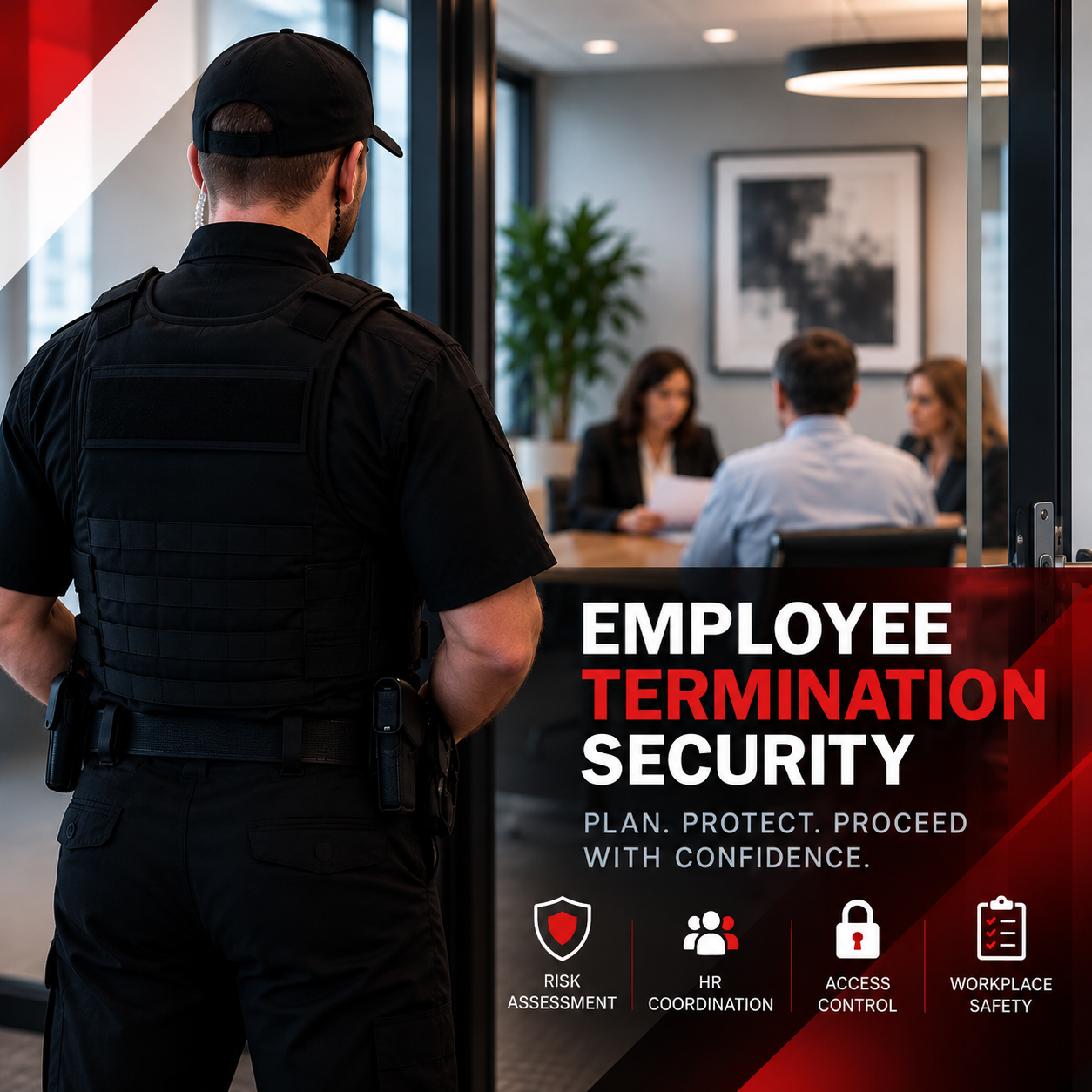
Security officer monitoring an employee termination meeting in a modern office, with an employee termination security overlay highlighting risk assessment, HR coordination, access control, and workplace safety.

An employee termination meeting may last only a few minutes, but preparing for it should start well before everyone enters the room. Most terminations happen without a serious security issue. However, when warning signs or unusual circumstances exist, employee termination security can give HR and management an extra layer of support. The goal is not to treat every departing employee like a threat. Instead, businesses should evaluate the situation, prepare for realistic risks, protect everyone involved, and have a clear response plan if the meeting becomes difficult.

In this guide, we will cover how businesses can coordinate HR, management, access control, and professional security to support a respectful termination process while protecting workplace safety.

Start With a Risk Assessment Before the Termination

Good planning starts with the circumstances surrounding the termination. A routine layoff involving an employee with no history of concerning behavior may require little more than standard HR procedures. A different situation may involve threats, aggressive behavior, ongoing disputes, stalking concerns, repeated confrontations, or other documented warning signs. Those situations deserve additional planning.

Businesses should make decisions based on specific behavior and available information rather than assumptions about the employee. HR, management, and security personnel can review previous incidents and determine whether additional precautions make sense. Consider the employee’s access to the building, parking areas, sensitive information, equipment, keys, access cards, and other company resources. This process also provides an opportunity to review the physical property. Which exit should the employee use? Are other employees likely to gather near the meeting room? Can the employee leave without walking through a crowded workspace?

OSHA recommends that employers evaluate workplace violence risks and use measures such as policies, employee training, access controls, lighting, surveillance, and security personnel when appropriate. The agency also stresses that workplace violence can include threats, intimidation, harassment, and physical violence—not only major incidents. OSHA workplace violence guidance

If your organization has recently changed staffing, access procedures, operating hours, or the layout of your property, a broader business security audit can also reveal weaknesses that affect employee termination security.

Build an Employee Termination Security Plan Before the Meeting

Once management decides additional precautions are appropriate, everyone involved should understand their role. HR should manage the employment process. Management should provide necessary operational information. IT should address digital access. Security should focus on protecting people and property while supporting a controlled environment.

A practical termination plan should address several points: HR, management, and a security officer review employee records and access information while preparing an employee termination security plan before the meeting.

  • Select a private meeting location with a clear exit route and avoid unnecessary spectators.
  • Decide who will attend and who will communicate the termination.
  • Position security nearby when a visible officer inside the meeting would create unnecessary tension.
  • Coordinate the timing of badge, key, alarm-code, computer, email, VPN, and other access changes.
  • Plan how the employee will retrieve personal belongings and return company property.
  • Decide who employees should contact if the former employee attempts to return without authorization.


Security personnel do not need to dominate the process. In many situations, their greatest value comes from being prepared and available.

For example, a trained officer can monitor the surrounding area while HR conducts the meeting privately. If the employee leaves calmly, security may only need to observe the departure. If the situation changes, the officer is already in position to respond. This type of preparation also strengthens HR security because HR professionals can concentrate on the employment discussion instead of trying to manage the building at the same time.

The Cybersecurity and Infrastructure Security Agency maintains workplace violence and insider-threat resources that encourage organizations to prepare policies, reporting procedures, training, and response plans before a problem develops. CISA insider-threat mitigation resources

Use Security to Support Workplace Safety During the Meeting

Professional security should support the termination process without unnecessarily escalating it. A security officer is generally not there to conduct the termination conversation. HR or management should handle the employment decision. Instead, the officer can maintain awareness of the environment, control access when needed, watch nearby areas, and respond if behavior changes. Good officers also understand the importance of communication and de-escalation. A calm, professional presence can help keep a difficult situation from becoming more disruptive. This is one reason training matters. Security officers may need to recognize changes in behavior, communicate clearly, set boundaries, call for assistance, or determine when an incident requires emergency services.

All Pro Security recently covered how trained and licensed security officers use observation, communication, decision-making, and response skills in professional assignments. Those abilities become especially important during sensitive workplace situations. The appropriate level of security will depend on the circumstances. Some businesses may only need an unarmed officer nearby. Other situations may justify additional officers or a different level of coverage based on a documented threat assessment.

If management believes an immediate threat exists, the situation goes beyond normal HR security procedures. Contact law enforcement or emergency services when appropriate rather than relying solely on private security. The objective remains straightforward: maintain workplace safety while allowing HR to complete the process as professionally and respectfully as possible.

HR Security Continues After the Employee Leaves

A successful termination meeting does not always mean the security process ends when the person exits the building.

First, confirm that physical and electronic access has been addressed. Collect company keys, access cards, identification, devices, and other property according to company procedures. At the same time, IT should complete any planned changes to system access.

Next, determine whether temporary security adjustments are necessary. A business may choose to increase lobby coverage, schedule additional patrols, watch a particular entrance, or brief reception staff for several days after a difficult termination. These precautions should match the actual risk instead of becoming permanent changes without a reason.

Communication matters as well. Employees who need specific information should receive clear instructions. For example, reception personnel may need to know that a former employee no longer has authorized building access. Other employees do not need unnecessary details about the termination.

Security teams should also document relevant incidents. If a former employee attempts to enter the property, makes threats, repeatedly contacts employees, or creates another security concern, accurate reports give management a clearer record of what occurred. This is where technology can strengthen physical security. Cameras can help monitor entrances and parking areas. Electronic access systems can block inactive credentials. Mobile patrols can provide additional checks outside normal operating hours.

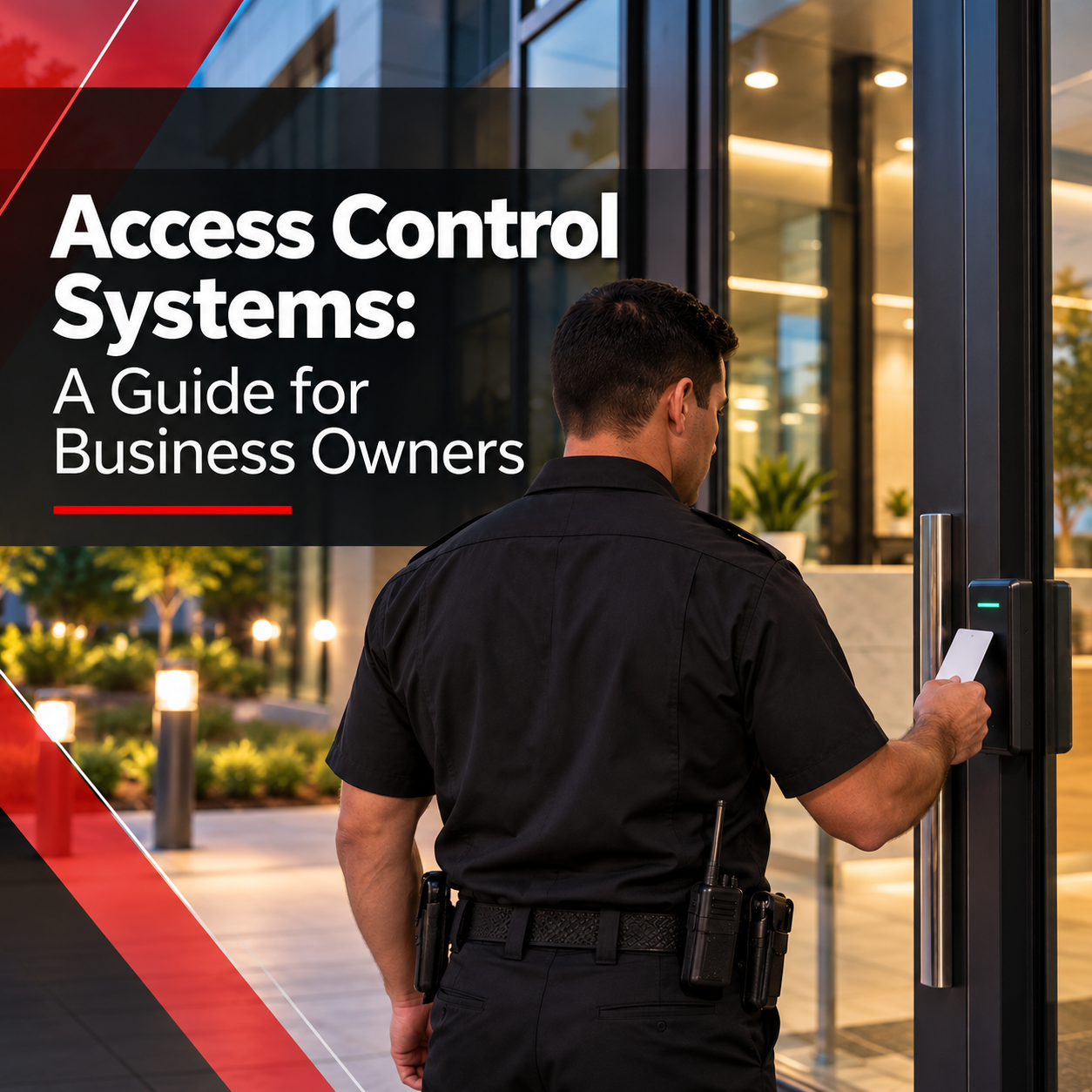
Security officer revoking an employee access badge at a corporate entry point while monitoring access control systems as the former employee exits the building.

For organizations with several properties, patrol tracking and reporting can also help managers confirm that scheduled checks took place. These measures create a more complete workplace safety plan without requiring a permanent security officer at every entrance.

When Professional Employee Termination Security Makes Sense

Security does not need to be present for every termination. However, professional assistance can be valuable when circumstances create uncertainty or when an organization does not have trained personnel available to manage the physical security side of the process.

All Pro Security specifically offers emergency response services for situations that include employee terminations, angry tenants, and other short-notice security concerns. Depending on the situation, the company can provide armed or unarmed security personnel and other security resources. Explore All Pro Security services. Professional security can also help businesses plan the assignment before an officer arrives. That can include identifying entrances, establishing post orders, discussing expected responsibilities, reviewing the meeting location, and determining how long additional coverage may be necessary.

All Pro Security supports businesses in Utah and across multiple states with security guards, mobile patrols, integrated security systems, emergency response, and other security services.

Prepare Before a Difficult Conversation Becomes a Security Problem

Employee terminations can be uncomfortable for everyone involved. Preparation helps keep those difficult conversations organized, respectful, and safer. Effective employee termination security starts with a realistic assessment of the situation. From there, HR, management, IT, and security can coordinate access changes, meeting logistics, departure procedures, and follow-up measures.

Most importantly, security should support the process rather than control it. The right plan gives the HR room to do its job while trained professionals focus on protecting employees, visitors, and property. If your organization is preparing for a difficult termination, dealing with a short-notice security concern, or reviewing its workplace safety procedures, All Pro Security can help you determine the right level of coverage.

Contact All Pro Security today for a free consultation. Call 801-796-1227 or contact All Pro Security to discuss employee termination security, emergency response, or a customized security plan for your organization.

Picture of Kyle Haub

Kyle Haub

Author
Security and Support Specialist

All Pro Security
Privacy Overview

This website uses cookies so that we can provide you with the best user experience possible. Cookie information is stored in your browser and performs functions such as recognising you when you return to our website and helping our team to understand which sections of the website you find most interesting and useful.