What would happen if an employee discovered a broken door, suspicious person, missing inventory, or threatening customer at your business today? Would everyone know who to contact and what to do next? A practical small business security plan answers those questions before an incident occurs.
Small businesses face many of the same risks as larger organizations, including theft, vandalism, workplace violence, unauthorized access, cyber incidents, and emergencies. However, they often have fewer employees and resources available to manage those threats. That makes clear procedures and carefully selected security measures especially important.
Creating an effective plan does not mean turning your property into a fortress. It means identifying your most important risks, establishing sensible safeguards, training employees, and preparing for emergencies. This guide explains how to build a security plan that supports your employees, customers, property, and daily operations.
Assess the Security Risks Facing Your Business
Every effective security plan begins with a thorough risk assessment. Before purchasing cameras, hiring guards, or changing locks, you need to understand what you are protecting and where your vulnerabilities are located.
Start by identifying your critical assets. Depending on your business, these may include:
- Employees and customers
- Cash and financial records
- Inventory and merchandise
- Vehicles, tools, and equipment
- Computers and electronic systems
- Customer or employee information
- Keys, access cards, and alarm codes
- Your ability to continue operating
Next, walk through your property during both business hours and after dark. Look at the building from the perspective of someone trying to enter unnoticed, steal property, or avoid surveillance.
Pay close attention to entrances, exits, windows, parking areas, loading zones, storage rooms, utility areas, stairwells, and landscaping. Check whether doors close and lock properly. Look for burned-out lights, overgrown shrubs, damaged fencing, blocked camera views, or areas where employees work alone.
Review previous incidents and near misses. Missing inventory, repeated loitering, lost keys, vandalism, alarm activations, aggressive customers, and doors left open may reveal patterns that require attention.
Employees can also provide valuable information. They may notice suspicious activity, procedural problems, or vulnerable areas that owners and managers rarely see.
The CISA Security Planning Workbook recommends identifying potential threats, examining their possible effects, and using that information to prioritize protective measures.
Rank each risk according to its likelihood and potential impact. A broken rear-door lock may require immediate action, while a lower-risk storage area may only need an updated access policy.
This process helps you focus your security budget on meaningful business protection instead of purchasing equipment that does not address your actual vulnerabilities.
Strengthen Your Physical Security
After identifying your risks, begin building layers of physical security. No single security measure can protect a business from every possible threat.
Cameras may record an incident, but they cannot physically stop an unauthorized person. Locks can restrict access, but they offer limited protection when employees share keys or leave doors open. Security officers provide a trained human presence, but they are most effective when supported by good lighting, access controls, cameras, and clear procedures.
Improve Lighting and Visibility
Exterior lighting should provide clear visibility around entrances, parking spaces, walkways, loading areas, dumpsters, and alleys. Good lighting can discourage unwanted activity and help employees identify hazards before approaching the building.
Trim landscaping that blocks windows, creates hiding places, or interferes with camera views. Signs, equipment, stored materials, and vehicles should not obstruct important sightlines.
Interior lighting is also important. Employees should be able to clearly see hallways, storage areas, stairwells, and entrances during opening and closing procedures.
Control Access to the Property
Decide which doors should be used by customers, employees, vendors, and delivery drivers. Employees should not allow unknown individuals to follow them into restricted areas.
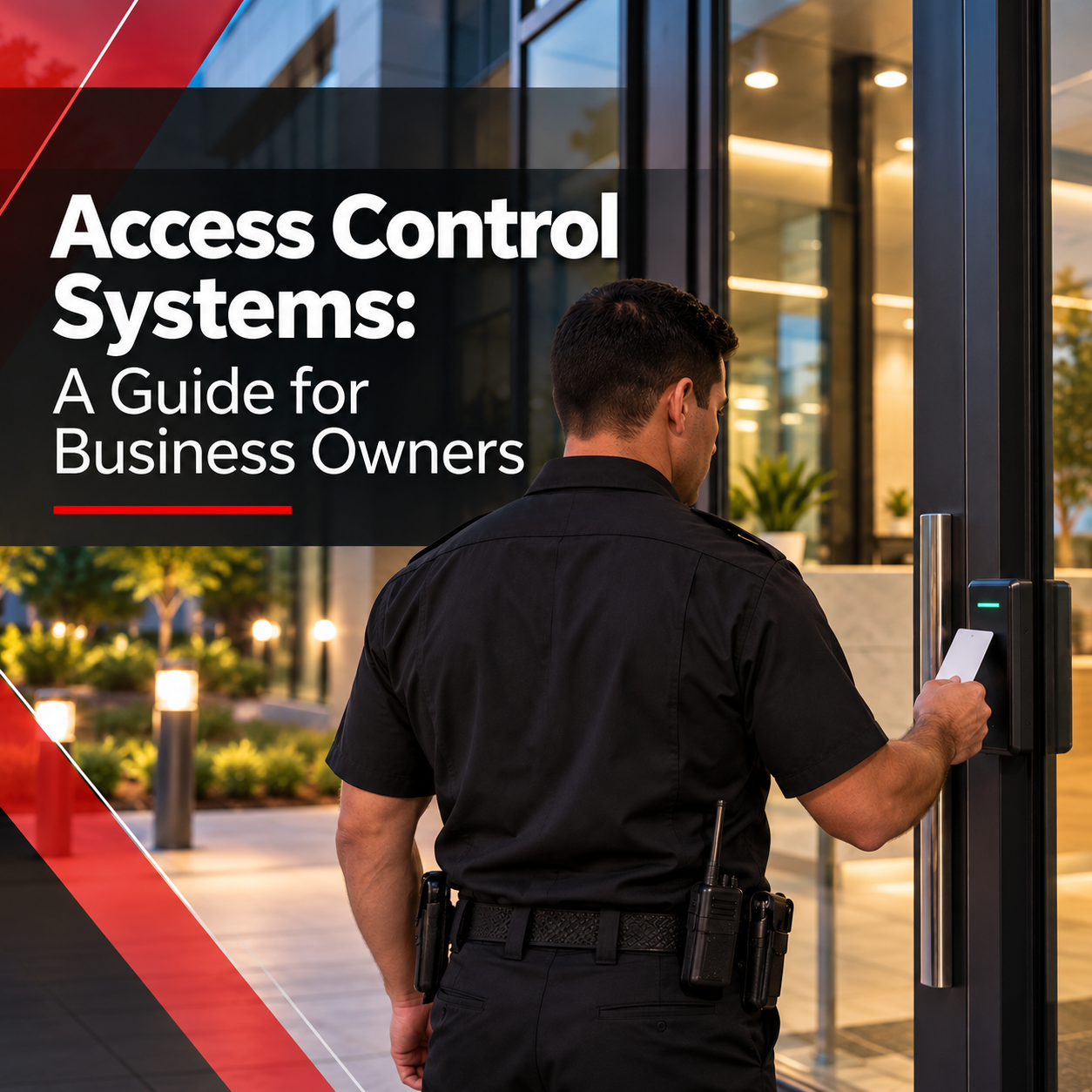
Limit access to offices, cash-handling locations, inventory rooms, computer systems, key storage, and other sensitive areas. Use locks, electronic credentials, visitor logs, temporary badges, or escorted access where appropriate.
Shared alarm codes and keys can make it difficult to determine who entered the property. Change codes when employees leave the company and recover keys, cards, uniforms, and other company property promptly.
Review Cameras and Alarm Systems
Place cameras where they will capture useful information rather than simply where installation is easiest. Entrance cameras should provide clear facial views. Parking lots, registers, loading areas, and inventory rooms may require wider coverage.
Test recordings during both daylight and nighttime conditions. Make sure authorized employees know how to retrieve footage and confirm how long recordings are stored.
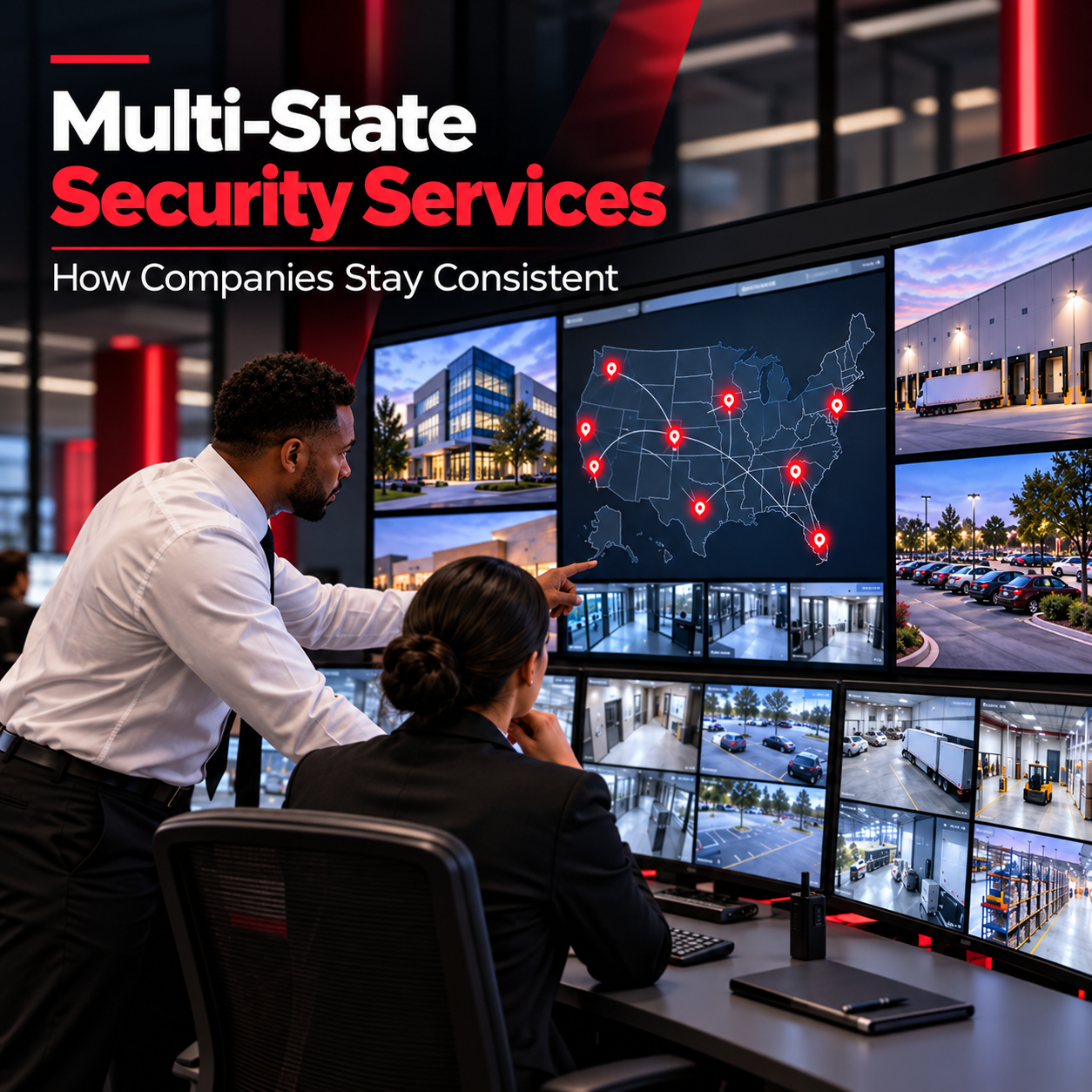
Alarm contacts, motion sensors, panic buttons, remote alerts, and monitored surveillance can provide additional layers of protection. Businesses with large properties or isolated areas may also benefit from camera monitoring trailers or mobile surveillance solutions.
All Pro Security provides integrated security systems that combine security personnel, cameras, sensors, monitoring, dispatch, and reporting into a coordinated program.
Establish Clear Employee Security Procedures
Technology cannot replace consistent employee procedures. Many security failures happen during ordinary activities such as opening the business, accepting a delivery, handling cash, or closing for the night.
Written procedures help employees understand their responsibilities and reduce confusion during stressful situations.
Your small business security plan should clearly explain:
- Who opens and closes the building
- Who controls keys and access credentials
- Who receives alarm notifications
- How visitors and vendors are handled
- How deliveries are accepted
- How cash and valuable inventory are secured
- How suspicious activity is reported
- When employees should contact management, security, or 911
- How incidents are documented
Keep procedures practical. Employees are more likely to follow a short, clear checklist than a lengthy manual they rarely review.
For example, a closing checklist might require employees to secure cash, check restrooms and storage areas, lock rear doors, verify that no customers remain inside, and arm the alarm system.
Opening procedures may require employees to observe the parking lot before exiting their vehicles, look for signs of forced entry, enter through a designated door, and avoid entering the building if something appears unusual.
Employees should also understand the limits of their responsibilities. Staff members should not be expected to physically confront suspected thieves, trespassers, or violent individuals unless intervention is part of their job and they have received proper training.
Instead, teach employees when to create distance, move customers to safety, contact a manager, call security, or call emergency services.
The Occupational Safety and Health Administration’s workplace violence guidance emphasizes hazard assessment, prevention policies, employee training, and procedures for reporting concerning behavior.
Review security expectations during employee onboarding and provide refresher training throughout the year. Training should also occur after an incident, procedural change, remodel, staffing change, or expansion.
Prepare for Emergencies and Security Incidents
Prevention is important, but your security planning process must also address what happens when prevention fails.
Small businesses should prepare for situations such as:
- Theft or robbery
- Fire or smoke
- Medical emergencies
- Workplace violence
- Severe weather
- Power outages
- Suspicious packages
- Active threats
- Alarm activations
- Gas leaks or hazardous materials
- Cyber incidents
- Building damage
People often freeze or make conflicting decisions during emergencies. Written response procedures provide direction when employees are under pressure.
Your first priorities should be protecting life, contacting emergency services, preventing additional harm, preserving evidence, and communicating with employees and customers.
Identify who has authority to evacuate the building, close the business, contact law enforcement, notify the property owner, communicate with insurance providers, or speak publicly on behalf of the company.
Maintain an emergency contact list that includes:
- Police, fire, and medical services
- Company owners and managers
- Building management
- Utility providers
- Alarm and monitoring companies
- Insurance representatives
- IT support
- Your professional security provider
Keep the contact list in more than one location. Employees should still be able to access essential numbers during a power outage, network failure, or evacuation.
The federal government’s Ready Business emergency planning resources recommend creating procedures that protect employees, contractors, visitors, and business operations.
The U.S. Small Business Administration also encourages businesses to assess risks, develop emergency plans, communicate with employees, protect important records, and prepare for operational disruptions.
Conduct occasional drills so employees can practice evacuation routes, assembly procedures, emergency communication, and accountability. After each drill, identify delays or confusion and update the plan accordingly.
Decide Whether You Need Professional Security Services
Many small businesses can improve security through better locks, lighting, cameras, and employee procedures. However, some risks require professional security support.
Your business may benefit from professional services when:
- Employees regularly open or close alone
- The property experiences theft or vandalism
- Customers or employees have reported feeling unsafe
- The business stores valuable inventory or equipment
- Parking areas are poorly visible
- The property remains vacant overnight
- Employees handle significant amounts of cash
- Trespassing or loitering occurs frequently
- Response times from management are slow
- The business hosts events or large crowds
- Previous incidents have exposed gaps in the current plan
A permanent security officer is not the only option. Businesses can choose services based on their actual risks, hours, and budget.
All Pro Security offers armed and unarmed security guards for businesses needing access control, customer assistance, visible deterrence, incident response, and on-site protection.
Businesses that do not require a full-time officer may benefit from mobile patrol services. Patrol officers can conduct scheduled or randomized property checks, inspect doors, respond to alarms, document suspicious activity, and provide a visible presence during higher-risk hours.
Remote camera monitoring may also help businesses detect activity and request an appropriate response without staffing an officer at the property around the clock.
Professional security providers can help owners determine which combination of guards, patrols, cameras, sensors, access controls, and employee procedures offers the most practical protection.
Review and Update Your Security Plan Regularly
A small business security plan should never be treated as a one-time document. Risks change as the company grows, adds employees, changes operating hours, purchases equipment, opens new locations, or begins serving different customers.
Review the plan at least once each year. You should also review it after:
- A theft, threat, accident, or emergency
- A change in business hours
- Significant employee turnover
- A remodel or expansion
- The installation of new equipment
- Changes to entrances or parking areas
- A new insurance requirement
- Repeated suspicious activity
- Changes in neighboring properties
Test alarms, cameras, emergency lighting, access cards, locks, and communication systems. Confirm that managers can locate the plan and that employee contact information remains current.
Ask employees whether procedures are realistic. A security rule that cannot be followed during normal operations may need to be revised.
Document updates and provide new training whenever responsibilities change.
Protect Your Small Business with a Practical Security Plan
A strong security plan does not need to be overly complicated. It needs to reflect the actual risks facing your business and give employees clear instructions for preventing and responding to incidents.
Start with a risk assessment. Strengthen doors, lighting, access controls, cameras, and alarms. Establish written employee procedures. Prepare for emergencies and determine whether professional security support would reduce your most serious risks.
All Pro Security is a Utah-founded, Best of State award-winning security company serving businesses throughout Utah and other western states. Available services include armed and unarmed guards, mobile patrols, remote camera monitoring, emergency response, integrated security systems, and event staffing.
Geo-fencing, patrol tracking, detailed reporting, and 24/7 dispatch provide additional visibility and accountability when security personnel are part of your plan.
Contact All Pro Security today for a free consultation. Call 801-796-1227 or visit the All Pro Security contact page to discuss a customized security plan for your small business.

Kyle Haub
Author
Security and Support Specialist